Common Types of Paint Booth Filter Media
Paint booth filters are usually divided into different types depending on where they are installed and what part of the airflow they handle:
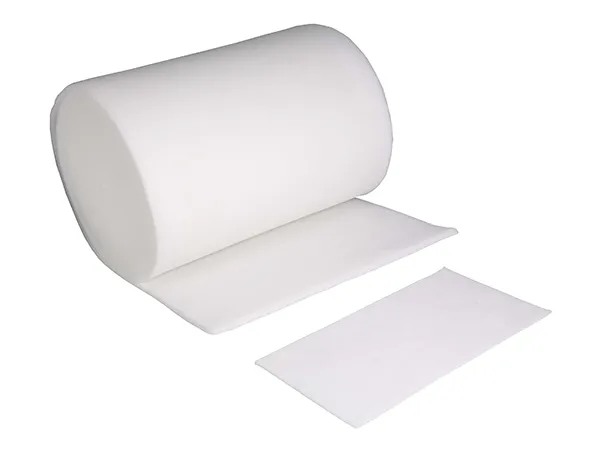
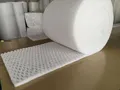
Ceiling filter media (high-efficiency filter layer)
Installed under the plenum chamber and covering the full top area of the booth. This filter medium is the most important layer during the finishing process because it traps most of the overspray before it reaches the floor filters. Thanks to ceiling filters, the filtration accuracy is higher, usually ≥1–5 μm, and high-efficiency types can reach sub-micron levels. They absorb overspray well and usually need replacement after about 400 working hours. The ceiling filters condition has a direct influence on the final paint result, since worn or clogged filters affect airflow and can lead to uneven surfaces or particles settling on the finish.
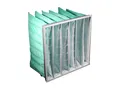
Bag filters for intake or exhaust
Bag filters for intake or exhaust have a much bigger filtering area than flat media, often several times larger for the same size. Because of this, they last 2–5 times longer before needing replacement. The unit price is higher, but the long service life reduces the yearly cost. They use a metal frame and tear-resistant synthetic fibers that stay stable under stronger airflow and do not deform easily. Their large dust-holding capacity, low pressure drop and long lifespan make them a practical option for spray booths, especially in high-load conditions where stricter emission standards are required. In general, their overall performance is better than traditional flat filters.
Intake filter media (pre-filters)
Installed at the fresh-air inlet or in front of the intake fan. They capture larger particles, usually ≥5–10 μm, and hold a considerable amount of dust. These filters need to be replaced regularly, generally every 100 working hours or earlier if contamination increases.
Floor filter media (fiberglass filter / exhaust filter)
Located under the floor grilles or before the exhaust fan. These filters trap fine overspray particles and dust that pass through the ceiling filter or rise from the floor. They require high filtration performance and have a large dust-holding capacity. Replacement is typically needed every 100 working hours.
Filter paper
Made from natural fibers (pulp, cotton), synthetic fibers (polyester, polypropylene) or inorganic fibers (fiberglass). It uses interception and adsorption to separate impurities in dry spray booth systems. Special pleated filter paper is used as an alternative to water curtains, capturing overspray efficiently while remaining easy to handle and environmentally friendly.