FAQs
What types of paint booths are available?
What types of paint booths are available?
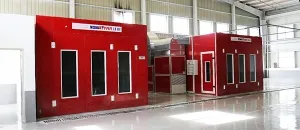
The range includes spray booths used in automotive repair, bus and truck workshops, aircraft coating, marine and yacht finishing, industrial equipment painting and furniture coating. It also covers open-face booths for basic spraying tasks, tabletop booths for small parts, retractable booths for tight spaces and spray & bake booths designed for water-based paint. Each paint booth type is designed to match different workpiece sizes and coating requirements.
How does a paint booth work?
How does a paint booth work?
A paint booth works by pulling in filtered air and moving it across the area where the coating is applied, so the overspray is taken away and dust can’t settle on the surface. The airflow can be vertical or horizontal, depending on the booth design, and helps maintain a clean environment by preventing dust and other particles from entering the coating area. Some models also offer temperature and humidity control to support proper paint application and curing. Depending on the configuration, the booth may handle only spraying operations or combine spraying and drying functions in the same enclosure.
How does an automotive paint booth keep the spraying environment clean?
How does an automotive paint booth keep the spraying environment clean?
Automotive paint booths rely on a sealed structure and a multi-layer filtration setup that stops dust and other small particles before they can enter the spraying area. The airflow moves in a controlled direction, creating a barrier that keeps outside contaminants, such as fine dust, floating particles or even small insects, away from the coating surface. This controlled setup keeps the spraying area clean throughout the whole process, so the paint goes on evenly and the surface isn’t affected by dust or small particles.
What are the practical differences between Yubase-O, Yubase-B and Yubase-T?
What are the practical differences between Yubase-O, Yubase-B and Yubase-T?
Yubase-O uses two 3 kW motors installed inside the cabin together with dual-inlet centrifugal fans. Having the motors inside keeps the design simple and helps the airflow stay steady while the booth is running.
Yubase-B also uses two 3 kW motors with dual-inlet centrifugal fans, but it runs with a belt-drive system. Since the belts and pulleys are exposed and simple to access, it's easier to carry out regular maintenance and any replacement can be handled quickly.
Yubase-T works a little differently from the other Yubase models. It runs with one 7.5 kW motor that drives a turbine fan directly, which gives it a stronger airflow. Because of this fan setup, the outside layout looks a bit different compared with the other models. Since there’s no belt in between, the power goes straight to the fan, so the airflow responds quicker when the booth is running.
Yubase-B also uses two 3 kW motors with dual-inlet centrifugal fans, but it runs with a belt-drive system. Since the belts and pulleys are exposed and simple to access, it's easier to carry out regular maintenance and any replacement can be handled quickly.
Yubase-T works a little differently from the other Yubase models. It runs with one 7.5 kW motor that drives a turbine fan directly, which gives it a stronger airflow. Because of this fan setup, the outside layout looks a bit different compared with the other models. Since there’s no belt in between, the power goes straight to the fan, so the airflow responds quicker when the booth is running.
What heating options are available for the bus and truck paint booths? Can they meet drying requirements for large vehicles?
What heating options are available for the bus and truck paint booths? Can they meet drying requirements for large vehicles?
Bus and truck paint booths can be equipped with gas, diesel or electric heating, either as a single option or as a mixed setup. For example, a typical configuration may use a 232 kW stainless-steel heat exchanger together with a Riello RG5S diesel burner rated at 260,000 kcal/h. The heating capacity is enough for curing buses and trucks, incluso when the surfaces are large or the coating layer is thicker.
Do the bus and truck spray booths meet environmental and safety requirements?
Do the bus and truck spray booths meet environmental and safety requirements?
These booths follow EN779 filtration standards and can use filters such as G3 and F5. They can also be fitted with activated-carbon adsorption and RCO (regenerative catalytic oxidation) systems, giving VOC removal rates above 90%. For safety, the design includes explosion-proof components, gas detectors and a linked CO₂ fire-suppression system. All these features help the booth meet environmental requirements and maintain safe operation throughout the process.
How accurate is the temperature control in bus and truck paint booths, and does it affect the coating quality?
How accurate is the temperature control in bus and truck paint booths, and does it affect the coating quality?
The booth uses an automatic temperature control system with an accuracy of about ±2°C. Maintaining a steady temperature is important as it allows the coating cure evenly, so the paint adheres better and dries smoothly, without any noticeable issues. When the heat fluctuates too much, large panels can develop cracks or uneven areas, so this level of control plays an important role in maintaining a smooth and consistent finish on buses and trucks.
What auxiliary equipment can be added to improve spraying results on buses and trucks with irregular shapes?
What auxiliary equipment can be added to improve spraying results on buses and trucks with irregular shapes?
Depending on the structure of the vehicle, the booth can be fitted with tools that help reach difficult areas. Options include a rotating platform or a lifting platform for full-angle access, and a custom three-axis movable platform that allows operators to work comfortably on side panels, roof sections and other areas where large vehicles usually need extra coverage.
Is the control system in the bus and truck spray booths easy to use, and does it support remote management?
Is the control system in the bus and truck spray booths easy to use, and does it support remote management?
Bus and truck spray booths come with a control system that includes a temperature controller, baking timer, switches and fault indicators. The control panel uses a PLC with a touch screen, so the operator can set the temperature, airflow and curing time directly from the screen. It also has a remote-monitoring option, which lets technicians see how the booth is running, get fault alerts right away and adjust basic settings even if they’re not in the workshop.
For workshops with restricted space, are there bus & truck spray booth options designed to fit more compact layouts?
For workshops with restricted space, are there bus & truck spray booth options designed to fit more compact layouts?
Yes. For workshops that don’t have enough indoor space, there are outdoor paint booths built with a protective outer shell to handle harsh weather. Some models can also be made in a split structure, where the main cabin is divided into two sections using folding doors or an electric roller door. This layout helps fit the booth into tighter areas while still keeping enough room for bus and truck coating work.
What does the aircraft paint booth do to help with small-area repairs on the fuselage, such as lightning-strike marks or corrosion damage?
What does the aircraft paint booth do to help with small-area repairs on the fuselage, such as lightning-strike marks or corrosion damage?
Paint booths keep the repair area clean by stopping dust and other particles from getting into the coating. They also let users control the temperature very precisely, which helps the paint cure evenly and settle well on the repaired spot. As a result, the repaired area ends up matching the surrounding finish, making the transition hard to notice.
How does the aircraft paint booth prevent defects such as particles or bubbles when the entire aircraft is being repainted?
How does the aircraft paint booth prevent defects such as particles or bubbles when the entire aircraft is being repainted?
When the whole aircraft needs a new coat, the booth keeps the temperature and humidity inside at a steady level, so outside conditions don’t interfere with the coating process. At the same time, the filtration system captures dust and other airborne particles before they reach the surface. Keeping a stable and clean environment from the beginning makes it much easier to avoid problems like dust settling on the surface, bubbles forming in the coating or areas that dry unevenly.
How do the aircraft spray cabins maintain bonding strength when coating repaired carbon-fiber parts?
How do the aircraft spray cabins maintain bonding strength when coating repaired carbon-fiber parts?
These aircraft spray cabins keep the humidity under tight control, which matters a lot when working with carbon-fiber repairs. If moisture gets between the coating and the carbon-fiber surface, the bond weakens quickly. By keeping the air dry and stable, the coating sticks the way it should and the repaired parts keep their strength.
How do the paint booths help extend the service life of aluminum-alloy parts when applying an anti-corrosion primer?
How do the paint booths help extend the service life of aluminum-alloy parts when applying an anti-corrosion primer?
The coating cabins allow the primer to be applied at a steady, correct thickness, and the curing area maintains stable temperature and humidity while it dries. This helps the primer settle well on the aluminum surface and form a stronger bond. Once the primer dries completely, it forms a stronger protective film against corrosion, so the aluminum parts stay in good condition for a longer time.
Can these spray paint booths support the weight of yachts or other large marine components?
Can these spray paint booths support the weight of yachts or other large marine components?
Yes. These marine spray cabins are built with reinforced structures that can handle oversized components, including full hulls, hull sections and complete yacht bodies. They’re built to handle heavy loads, so the structure can safely carry large hulls or yacht sections while the coating work is done. There’s no risk of bending or instability during spraying or curing.
How does the airflow design in marine paint booths ensure that overspray is removed effectively without affecting the coating quality?
How does the airflow design in marine paint booths ensure that overspray is removed effectively without affecting the coating quality?
These marine spray paint booths use top pressure-balanced supply air together with pit exhaust or lower-side exhaust. This creates a vertical laminar airflow that moves straight down through the workspace. With this steady airflow, the overspray is pushed out quickly and doesn’t stay floating around the hull, which helps keep the coating clean and even.
Are the door options convenient for moving yachts and large ship sections in and out of the paint booth, and do they keep the booths well sealed?
Are the door options convenient for moving yachts and large ship sections in and out of the paint booth, and do they keep the booths well sealed?
Yes, marine coating booths can be equipped with electric lift doors, folding doors or sliding doors. All of them make it easier to move full yacht bodies or large sections in and out. At the same time, the doors seal well and resist strong wind pressure, so the coating environment inside stays stable.
How does the hot-air circulation system prevent corrosion when the paint booths are used in high-humidity environments?
How does the hot-air circulation system prevent corrosion when the paint booths are used in high-humidity environments?
The hot-air circulation system uses stainless-steel heaters and corrosion-resistant air ducts. These materials hold up well against heat and moisture, so they don’t rust even when the spray booth is running in high-humidity marine environments. This keeps the system in good working condition for longer and helps the airflow stay stable during operation.
What equipment can support full-coverage spraying when working with yacht hulls or segmented ship sections?
What equipment can support full-coverage spraying when working with yacht hulls or segmented ship sections?
These marine spray booths can be fitted with heavy-duty transfer carts or large rotating platforms that move or turn hull sections using an electric drive system. They can also be combined with height-adjustable work platforms, so operators can reach upper areas comfortably. With both systems working together, it becomes easier to spray every angle of the hull or section without leaving untreated spots.
Apart from marine spray and drying booths, what other equipment is available to support the full coating process?
Apart from marine spray and drying booths, what other equipment is available to support the full coating process?
Marine coating projects often require several supporting units to complete each stage of the workflow. The available options include powder-coating rooms, curing ovens, washing rooms, preparation rooms, paint-mixing rooms and dedicated storage spaces for hazardous materials. With these additional units, the coating process, from surface preparation to the final coating steps, can be carried out in a structured and continuous way.
Can the lighting system in the marine spray booths meet the requirements for coating complex hull structures?
Can the lighting system in the marine spray booths meet the requirements for coating complex hull structures?
The lighting setup used in these marine spray booths is designed to illuminate the cabin evenly, giving operators aclear view of every surface. It provides strong, diffused light that reaches corners, curved areas and higher sections of the hull. The clear and even lighting helps operators see every detail of the hull during spraying. Corners, curved areas and higher sections become easier to inspect, so the coating can be applied with better control and a more consistent finish.
Can the spray booths be customized for large industrial equipment, such as heavy machinery or oversized enclosures?
Can the spray booths be customized for large industrial equipment, such as heavy machinery or oversized enclosures?
Yes. These large-format spray booths can be tailored to match the needs of different industrial projects. The available options include downdraft layouts, dry-filter designs and booths built specifically for trucks and buses. These setups work well with different kinds of heavy equipment and large structures, so the booth can handle many types of coating jobs without problem.
How does the ventilation system in industrial equipment spray booths balance filtration performance and operating costs?
How does the ventilation system in industrial equipment spray booths balance filtration performance and operating costs?
The ventilation system in these industrial spray booths uses high-efficiency filter media designed to handle heat, dust and paint particles. The filters have a large surface area and a progressive-density structure, which helps them trap more contaminants while keeping airflow resistance low. Since the filters last longer and do not need to be replaced as often, the overall operating cost stays lower during daily use.
Can the lighting system meet the visibility requirements for coating large industrial equipment with complex shapes?
Can the lighting system meet the visibility requirements for coating large industrial equipment with complex shapes?
Yes. The industrial spray booths use Philips tri-phosphor tubes installed in the plenum and side walls, protected by tempered-glass covers. This setup provides bright and stable lighting across the entire workspace. Even corners, recessed areas and higher sections of large equipment can be seen clearly. Optional external maintenance walkways are also available, making the lighting easier to service while maintaining accurate spraying conditions.
Is the packaging suitable for long-distance transportation to ensure the booth components arrive intact?
Is the packaging suitable for long-distance transportation to ensure the booth components arrive intact?
For long-distance shipping, the spray booth components are wrapped with bubble film to absorb bumps and vibration during the journey. If the project requires extra protection, they can also be packed on reinforced steel pallets. These options help keep every part safe and prevent damage while the equipment is being transported.
What types of furniture can be coated in the woodworking paint booth?
What types of furniture can be coated in the woodworking paint booth?
The woodworking paint booth is designed for wooden products of different sizes, so it works well for chairs, tables, cabinet doors and similar pieces. It supports clear coats, glossy finishes, primers and topcoats, all in a clean and bright space that helps keep dust away and gives the operator better visibility while spraying.
Is there a way to reduce the drying time for wooden furniture?
Is there a way to reduce the drying time for wooden furniture?
Yes. When faster drying is needed, a drying room can be added to the setup. The air inside can be heated with gas, diesel, electricity or steam, which helps wood furniture and other wood products cure more quickly and consistently.
What airflow options are available for the woodworking paint booth with drying section, and how are they different?
What airflow options are available for the woodworking paint booth with drying section, and how are they different?
Woodworking paint booths with drying sections can be designed with two airflow layouts: crossflow or side-down draft. With the crossflow airflow design fresh air enters through the filters at the front and moves straight across the booth toward the exhaust section at the back. In the side-down draft airflow layout the air also enters from the front, but it gets pulled down or sideways depending on where the exhaust units are placed (back wall, side wall or lower section).
Both options handle overspray without problems. The main difference is the way air moves inside the booth. In a crossflow layout, the air travels straight from the front to the back. In a side-down draft layout, the air gets pulled down or to the sides, so the spray area stays clearer and more even, especially when working with wider or taller wooden panels.
Both options handle overspray without problems. The main difference is the way air moves inside the booth. In a crossflow layout, the air travels straight from the front to the back. In a side-down draft layout, the air gets pulled down or to the sides, so the spray area stays clearer and more even, especially when working with wider or taller wooden panels.
Does choosing between crossflow and side-down draft airflow affect coating efficiency in woodworking paint booths?
Does choosing between crossflow and side-down draft airflow affect coating efficiency in woodworking paint booths?
Crossflow and side-down draft mainly change how the overspray moves inside the booth. Crossflow pushes the air straight from the front toward the back, while the side-down draft pulls the air downward and out through the lower or side exhaust zones. Both options handle overspray well once they’re set up according to the workshop layout. In day-to-day use, the difference in coating speed or efficiency is minimal, so most customers just pick the airflow pattern that fits their space and the way they usually work.
What types of workpieces are suitable for open paint booths?
What types of workpieces are suitable for open paint booths?
Open-type paint booths are suitable for tasks where the coating process doesn’t require a fully controlled environment. Ideal for priming, anti-rust coatings and projects where the final surface doesn’t need a high-gloss look or a perfectly clean finish. They’re also practical for temporary jobs, small-batch spraying, or on-site touch-ups of large equipment.
Compared with enclosed paint booths, what cost advantages do open face paint booths offer?
Compared with enclosed paint booths, what cost advantages do open face paint booths offer?
Open face paint booths are much more affordable to build, install and maintain. These booths use a simple structure with a canopy, an exhaust fan and basic filters, which keeps the initial cost low. They use less energy too, since most of the airflow comes from natural ventilation and the exhaust fan doesn’t need a high-power motor. For workshops that need to keep costs under control, they’re a more affordable option compared to enclosed booths.
Can open paint booths handle oversized workpieces?
Can open paint booths handle oversized workpieces?
Yes. Open face paint booths can handle very large components because there are no fixed walls limiting the space. The open face layout gives enough room for extra-long, extra-wide or extra-tall parts, and moving them in and out is much easier compared to enclosed structures.
Are there any special site requirements when installing an open face paint booth?
Are there any special site requirements when installing an open face paint booth?
The site requirements are minimal. There’s no need for a fixed building or a dedicated room, which makes installation flexible. An open paint booth can be placed in a free area inside the workshop or on a flat outdoor space. What really matters is having enough room to fit the workpieces comfortably and making sure there’s simple airflow so the overspray can move out of the working area without building up.
What types of small workpieces can be coated in tabletop spray bake booths?
What types of small workpieces can be coated in tabletop spray bake booths?
Tabletop spray-bake booths are a good match for small parts made of wood, metal, plastic and other similar materials. They offer a clean, well-lit workspace where it’s easier to handle different shapes and get an even, predictable finish.
How do table top paint booths keep the workspace ventilated and reduce overspray buildup?
How do table top paint booths keep the workspace ventilated and reduce overspray buildup?
Table top paint booths pull fresh air in through the front opening, moves it across the work area and sends it out through the filter section at the back. With the explosion-proof axial fan keeping the airflow steady, the booth stays well-ventilated and overspray doesn’t settle in the workspace.
How do table top paint booths manage uneven or irregular small parts to achieve a uniform finish?
How do table top paint booths manage uneven or irregular small parts to achieve a uniform finish?
Table top paint booths come with a 360° rotating worktable that lets the part move smoothly while spraying. This rotation lets the operator reach all sides comfortably, without having to stop and move the part over and over. Even pieces with awkward or uneven shapes end up getting sprayed from every angle, so the coating looks even and complete.
Can the filtration system in a table top paint booth effectively remove overspray to prevent contamination?
Can the filtration system in a table top paint booth effectively remove overspray to prevent contamination?
The filtration setup in table top paint booths uses an angled fiberglass filter that captures the overspray as it moves through the airflow path. This helps keep paint particles from spreading into the workshop and protects the ventilation components behind the filter. By catching the overspray right away, the booth keeps the area cleaner and helps prevent paint mist from collecting on nearby parts of the equipment.
Can a table top paint booth be customized if the standard sizes don’t fit certain small parts?
Can a table top paint booth be customized if the standard sizes don’t fit certain small parts?
If the standard table top paint booth models are too small or too big for the customer’s workpieces, the paint booth can be made in custom dimensions. That way, the booth will match the size of the parts, and the coating work can be done without struggling for space.
In workshops or 4S service centers with limited space, how does a retractable paint booth help make better use of the area?
In workshops or 4S service centers with limited space, how does a retractable paint booth help make better use of the area?
A retractable paint booth is helpful in tight spaces because it doesn’t stay open all the time. It’s only extended while spraying, and once the job is done, it folds back so the space can be used for other tasks. That means the booth doesn’t occupy the space permanently, and the workshop can move things around and use the area more freely for everyday work.
Can a retractable paint booth handle different workpiece sizes, from passenger cars to large construction machinery?
Can a retractable paint booth handle different workpiece sizes, from passenger cars to large construction machinery?
A retractable paint booth can be built with custom length, width and height, or designed with multiple sliding sections. With these adjustments, the structure can open wide for large industrial equipment or stay smaller for passenger-car jobs. With those adjustments, a single booth can handle all kinds of workpieces, so there’s no need to prepare separate areas for different sizes.
Can a retractable paint booth be used for multiple workstations, and does this help improve space efficiency?
Can a retractable paint booth be used for multiple workstations, and does this help improve space efficiency?
A retractable paint booth can be shared across different types of work. The same area can switch between repair work, body panel preparation or coating tasks, depending on what the workshop needs at the moment. This reduces the downtime of single-purpose stations and helps the workshop make better use of limited space.
What is the purpose of connecting the paint mixing bench to the ventilation system of the mixing room?
What is the purpose of connecting the paint mixing bench to the ventilation system of the mixing room?
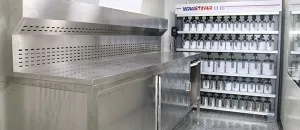
When the paint mixing bench is linked to the ventilation system, the fumes produced during paint preparation are removed quickly. The bench also includes a sink for cleaning spray guns and storage space for materials, which makes the setup safer and more convenient during daily work.
What factors are considered when customizing a paint preparation station to support coating quality?
What factors are considered when customizing a paint preparation station to support coating quality?
Custom paint prep stations are planned around the specific needs of the coating process. Key points include filtration, lighting, temperature and airflow, so each step before spraying takes place under suitable conditions. By meeting these requirements, the station helps maintain consistent quality in the following coating steps.
What advantages do infrared curing lamps offer in mobility and heat efficiency?
What advantages do infrared curing lamps offer in mobility and heat efficiency?
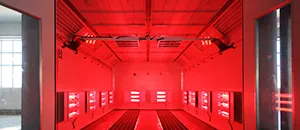
The infrared curing lamps use 304 stainless-steel reflector panels, which direct more heat toward the workpiece and improve energy use. They also come with smooth-rolling casters, so the lamps can move easily between the workshop, the spray booth and the prep area. The lamp can be moved right up to the area that needs heat, so the curing stays consistent no matter which workstation is being used.
How does a water-based paint booth ensure a proper finish when using waterborne coatings?
How does a water-based paint booth ensure a proper finish when using waterborne coatings?
A water-based paint booth includes a filtration system that keeps dust and particles out of the airflow, preventing contamination on the painted surface. The booth can also control temperature and humidity, which helps waterborne coatings level out, dry faster and cure evenly. When the booth keeps the temperature and humidity steady, water-based coatings settle more evenly, so the surface looks smoother and small flaws are less noticeable.
Why is an automotive frame straightening machine necessary when repairing collision damage?
Why is an automotive frame straightening machine necessary when repairing collision damage?
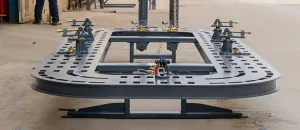
A collision can distort the vehicle’s structure, affect chassis alignment and interfere with the correct positioning of key components. A frame straightening machine restores the damaged sections to their original dimensions and brings the reference points of the chassis back to specification. If this step is skipped, the vehicle won’t recover the strength it needs, and it won’t be safe to drive again.